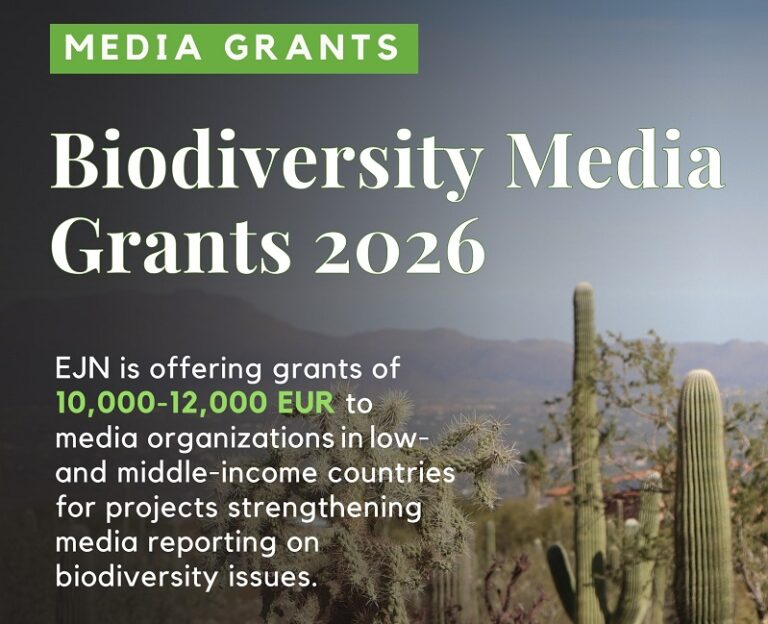
Applications are now open for the EJN Biodiversity Media Grants 2026. These grants offer up to 12,000 EUR to support media projects on biodiversity issues. The deadline is March 28, 2026 – just days away. Internews’ Earth Journalism Network (EJN) runs this program through its Biodiversity Media Initiative. It targets media organizations in low- and middle-income countries to improve reporting on threats to nature and solutions to protect it.
Key Takeaways
- EJN offers grants of 10,000-12,000 EUR to three or four media organizations in low- and middle-income countries for biodiversity projects.
- Applications must focus on improving reporting quality and skills in biodiversity hotspots, with a deadline of March 28, 2026.
- Eligibility requires being a media group or similar in qualifying countries, with proposals in English and no advocacy focus.
- Strong proposals tie to real threats, show measurable results, prove cost-effectiveness, and highlight team skills and fresh ideas.
EJN plans to fund three to four media organizations with grants of 10,000-12,000 EUR each. These projects aim to increase both the quality and number of biodiversity stories. They also build skills for journalists to cover these topics better. Selected groups get help from experienced mentors. Smaller budgets tend to win out, but bigger ones can qualify if they bring fresh ideas and need more resources.
You must meet clear rules to apply. Here are the key eligibility points:
- Media organizations in low- or middle-income countries, as listed by the World Bank.
- Strong interest in projects from biodiversity-rich areas or places with major biodiversity loss.
- Open to journalist networks, media groups, civil society organizations, or academic institutions – but preference goes to those linked to professional journalists, media outlets, or journalism schools.
- No applications focused on advocacy or political campaigns.
- Proposals must be in English, and you need a good grasp of English (or a translator for EJN staff talks).
- Past or current EJN grantees can apply, except those funded in 2025 – prior work will factor into choices.
- Be open about using AI tools in your proposal; unethical use, like passing off AI content as your own, leads to disqualification.
EJN judges applications on seven main points. Check these to see how your idea stacks up:
- Overall quality of the proposal.
- How well it fits the grant’s goals and priorities.
- Potential impact, including strong project design.
- Fresh and innovative activities.
- Solid budget that offers good value for money.
- Your team’s skill to pull it off.
- Balance of projects across different regions.
To boost your chances, follow these proposal tips based on the criteria:
- Tie your project to real biodiversity threats and fixes, like habitat loss in forests.
- Show clear, measurable results, such as trained journalists or published stories.
- Break down your budget to prove cost-effectiveness.
- Highlight new ideas, like using video or community workshops.
- Stress your team’s past success and why your region needs this.
Ready to apply? Start with the official page for full details. Follow these steps:
- Visit the EJN site and read all guidelines.
- Write your English proposal with project plans, budget, expected impact, and any AI use.
- Make sure it covers quality reporting on biodiversity in hotspots like tropical forests or coral reefs.
- Submit everything by March 28, 2026 via the apply link.
EJN looks at past grantee results but shares no specific examples here. The focus stays on low- and middle-income countries and biodiversity hotspots. For more chances, check these related opportunities:
- Photography 4 Humanity/Fotografiska Global Prize 2026
- Caribbean BluEFin Call for Proposals 2026 (up to $250,000)
- MIT Solve 10th Anniversary Global Challenge 2026
The EJN Biodiversity Media Grants 2026 offer a key chance for media groups in low- and middle-income countries to boost stories on nature threats and solutions with up to €12,000 in funding. Make sure your proposal shows clear impact, strong ideas, and good value to stand out. Head to the EJN site today and submit by March 28, 2026, before the deadline passes.
Frequently Asked Questions
Who can apply for the EJN Biodiversity Media Grants 2026?
Media organizations, journalist networks, or similar groups in low- or middle-income countries can apply, with preference for those linked to professional journalists.
What is the funding amount and deadline?
Grants range from 10,000 to 12,000 EUR each, and the deadline is March 28, 2026.
What do judges look for in proposals?
They check proposal quality, fit to goals, impact, innovation, budget value, team skills, and regional balance.
Are there tips to improve my application?
Link your project to biodiversity threats, show clear results like trained journalists, break down your budget, and highlight new ideas and your team’s experience.


Conversation
0 Comments