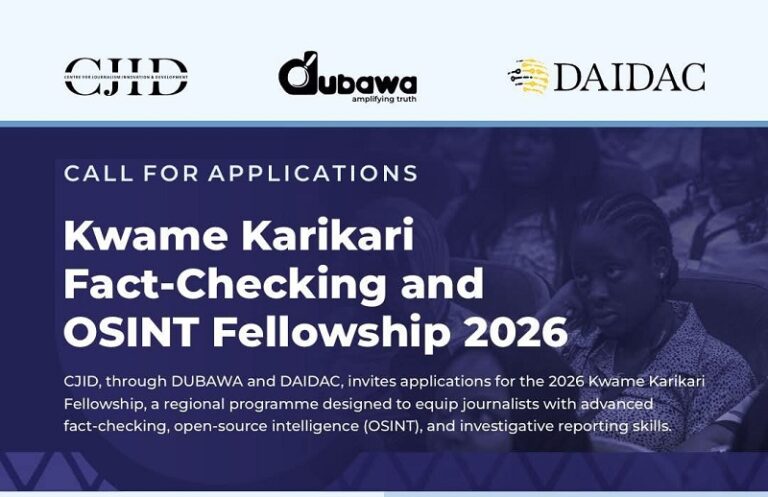
Deadline: April 4, 2026
Key Takeaways
- This six-month fellowship trains West African journalists in fact-checking and OSINT to fight misinformation.
- Fellows gain practical skills, publish reports, build newsroom capacity, and join a regional network.
- Eligibility includes full-time journalists from Nigeria, Ghana, Sierra Leone, Liberia, or The Gambia, with encouragement for women and those covering climate or conflict.
- Applications are due April 4, 2026, via an online form, leading to real impacts like more fact-checks and stronger media teams.
Applications are now open for the Kwame Karikari Fact-checking and OSINT Fellowship 2026. This six-month program targets journalists in West Africa. It focuses on fact-checking and open-source intelligence skills. The Premium Times Centre for Investigative Journalism runs it through its project, DUBAWA. The goal is to fight misinformation and build better verification habits.
This article covers the fellowship background, benefits, eligibility, and how to apply.
The fellowship started to fight the fast spread of false information. It aims to spread verified facts to cities and rural areas. Organizers want to make fact-checking a standard in newsrooms worldwide. They focus on information problems in Africa, mainly in English-speaking West Africa. This is the third time they offer it.
Professor Kwame Karikari inspired the name. He fought for media freedom. He also started the Media Foundation for West Africa. The program has two paths. One helps journalists add fact-checking to their work over six months. The other lets scholars do new research for publication. Both build skills against information disorder.
-
Practical OSINT training: Fellows get hands-on coaching in fact-checking with open-source tools. DUBAWA and DAIDAC teams guide them. They learn the latest verification methods.
-
Real-world impact: Reports appear on your media outlet and DUBAWA sites. This boosts reach and fights fake news.
-
Newsroom capacity building: Support sets up fact-checking desks. It strengthens checks inside news teams.
-
Regional professional network: Join other journalists from West Africa. Work together on accuracy.
-
Multi-platform visibility: Lead talks on fact-checking via social media, radio, and TV. Promote media literacy too.
-
Open to full-time journalists from Nigeria, Ghana, Sierra Leone, Liberia, or The Gambia.
-
Fact-checkers or investigative reporters ready to improve skills.
-
Past fellows keen on OSINT work.
-
Strong writers who love truth.
-
People eager to learn fact-checking.
-
Those who can commit time to the program.
-
Journalists with boss approval to publish checks.
-
Female journalists and those with disabilities get strong encouragement.
-
Experts in climate or conflict stories are welcome.
Journalists can apply through a simple online form. Submit your application here. For full details, check the official fellowship page. The deadline is April 4, 2026. The program lasts six months after selection. Apply soon to join this key effort.
Past editions show real change. The third series builds on success stories from the official site. Fellows have promoted accountability in public offices. They helped grow fact-checking in newsrooms. Knowledge about information disorder grew too. Previous participants shared how training led to published work and stronger teams.
- One outcome: More fact-checks in local media.
- Another: Networks that last beyond the program.
- Key result: Better tools against misinformation.
OSINT means open-source intelligence. It uses public online info for checks. Fact-checkers verify claims with these tools. The fellowship teaches them well. This matters in places like Nigeria and Ghana. False news spreads fast there. Climate and conflict reporters gain extra from it.
Misinformation grows quickly in West Africa. This program fights it with skills and networks.
Applicants in climate or conflict areas should apply. They bring needed views to the fight.
The Kwame Karikari Fact-checking and OSINT Fellowship offers West African journalists vital skills to combat misinformation through hands-on training and real-world projects. With benefits like publications, networking, and newsroom support, it builds lasting change in media accuracy. Apply by April 4, 2026, to join this impactful program and strengthen fact-checking in your community.
Frequently Asked Questions
What is the Kwame Karikari Fellowship?
It is a six-month program by DUBAWA for West African journalists to learn fact-checking and OSINT skills to battle misinformation.
Who can apply for the fellowship?
Full-time journalists from Nigeria, Ghana, Sierra Leone, Liberia, or The Gambia, especially fact-checkers, investigative reporters, women, and those with disabilities.
What benefits do fellows receive?
Hands-on OSINT training, published reports, newsroom support, regional networking, and visibility on multiple platforms.
How and when do I apply?
Submit the online form by April 4, 2026; check the official page for full details and the application link.
Conversation
0 Comments